The first time the lights stay on during an outage, solar stops feeling like a roof project and starts feeling like part of the house. Refrigerators keep running. Wi-Fi stays alive. The evening feels normal enough that nobody has to hunt for flashlights.
Solar panels alone do not guarantee that experience. Backup power takes planning, storage, switching, and a system that knows what to do when the grid goes down.
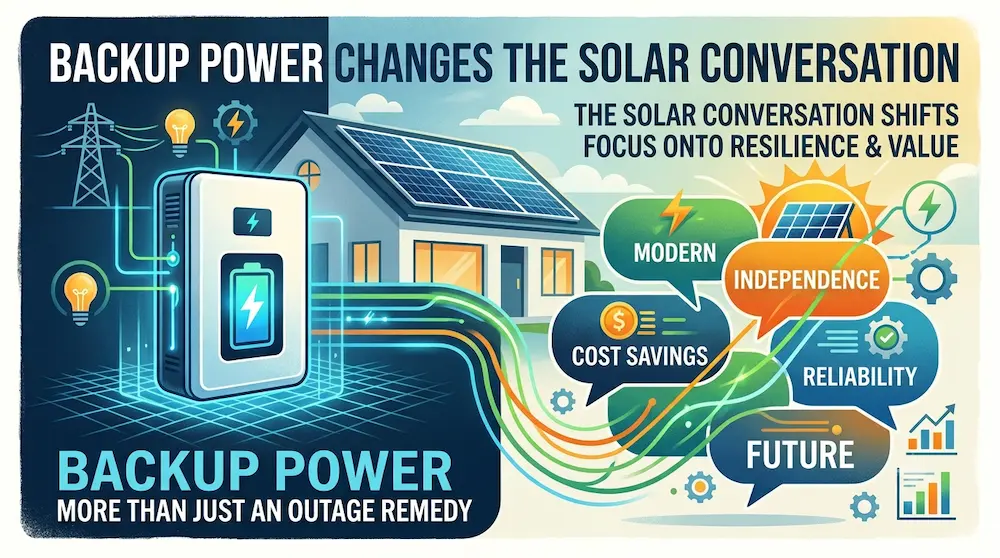
Why solar alone may not power the home in an outage
Many grid-tied solar systems shut down during a power outage for safety reasons. That surprises homeowners, but the logic is important: utility crews working on lines need protection from electricity being pushed back onto the grid.
To keep selected loads running, a home usually needs battery storage and backup equipment that can safely isolate the house from the grid. This is where the conversation moves beyond panels and inverters into whole-home energy design.
A micro inverter can still be part of the solar side of the story, especially when panel-level production and rooftop flexibility matter. But backup power asks another question: how does the home switch over and keep serving the loads that matter?
The role of an energy gateway
An energy gateway is the control point that manages energy flow between the grid, solar, storage, and home loads. During an outage, it helps the system transition into backup operation instead of simply shutting down.
Sigenergy’shome energy gateway is designed to work with SigenStor for backup power and energy management. According to Sigenergy, the Sigen Energy Gateway can provide 0 ms load-side disruption in supported configurations, which means the load side is designed to avoid a noticeable interruption during transition. Sigenergy also says its Gateway supports 24/7 outage protection and hybrid power sources.
Those are the kinds of details homeowners should discuss carefully with an installer, because backup expectations vary. Running a refrigerator and modem is different from running an entire home with air conditioning and high-load appliances.
Choose the loads before choosing the promise
The word “backup” can be slippery. Some systems support a few critical circuits. Others are designed for broader household coverage. The right answer depends on the home, the battery size, the inverter capacity, and the gateway configuration.
Before buying backup equipment, make a practical list:
• What must stay on during a short outage?
• What would be nice to have?
• Which loads are too large or too wasteful to back up?
• How long should the system reasonably carry the house?
That list is more useful than a vague request for “whole-home backup.” It gives the installer something real to design around.
Micro inverters still matter upstream
Backup power gets attention during outages, but the system still needs solar production during normal days. If the roof is shaded or complex, micro inverters may help harvest power more effectively from each panel. That energy can support daily loads, charge storage, or help the system recover after an outage.
In other words, the solar design and backup design are connected. They just are not the same thing.
Backup power is not about drama. It is about the house feeling boringly functional when the grid is not.
If your solar plans include outage protection, review Sigenergy’s Energy Gateway alongside your inverter and battery choices so the backup design matches what you actually need to keep running.

Moh. Shobirin, S.Kom adalah founder Jawaracloud.net sekaligus SEO Expert dan penulis teknologi. Dengan gelar Sarjana Komputer dan latar belakang elektronika, ia memiliki keahlian lintas bidang—mulai dari perbaikan hardware (komputer/printer) hingga strategi optimasi mesin pencari. Selain berkarya, ia juga aktif sebagai Trainer di bidang IT.