
Virtual Dedicated Server hosting — or simply VDS hosting — has become one of the most flexible and reliable solutions for modern web projects. But few people know how this technology actually appeared. So, the story begins in the early 2000s, when developers realized that shared hosting could no longer handle rapidly growing online applications. Imagine dozens of clients competing for the same server resources — something like living in a small shared apartment where everyone uses the same kitchen at once. VDS changed this by offering isolated environments on one physical server. The difference between these two approaches is as dramatic as renting an entire room instead of sharing a bed with a stranger.
If you are reading this, you might already be thinking about upgrading your hosting — and this article will guide you through the most important details.
The History Behind VDS Hosting
In the beginning, hosting companies relied solely on shared hosting. But as websites became heavier and software more demanding, developers needed a middle-ground solution — something not as expensive as a dedicated server but much more powerful than shared environments. Let’s consider the situation: a business launches an online marketplace, traffic grows, scripts load slowly, and the shared hosting provider limits resources. This is where VDS hosting was born — built on virtualization technologies such as OpenVZ, KVM, Xen, and VMware.
Compared to shared hosting, VDS offers guaranteed CPU, RAM, and storage. Compared to a dedicated server, it is more affordable because the physical machine is shared but logically divided. Think of it as renting a private office inside a large business center instead of buying the entire building.
You might agree, this type of flexibility is crucial today.
When Do You Actually Need VDS Hosting?
There are many situations where upgrading becomes necessary. For example, you need to run a CRM system that must work stably 24/7. Shared hosting will slow down under peak loads, while VDS provides isolated power. Or let’s imagine that your online store starts receiving more traffic — new products, new categories, and growing demand. A VDS gives you dedicated RAM and CPU so customers always get fast page loading.
Compared to cloud hosting, VDS offers more predictable pricing. Compared to VPS, the performance is often higher when using KVM-powered virtualization. For application developers, VDS hosting is a comfortable middle ground: you can install libraries, manage configurations, and customize the server environment — something impossible on shared hosting.
And you, as a project owner, will appreciate this freedom.
Characteristics That Influence VDS Pricing
Prices vary significantly depending on configuration. So, let’s explore the core factors.
1. CPU Power
More CPU cores mean more processing speed. For instance, 2-core VDS servers cost less than 6-core configurations. Compared to shared hosting, where CPU is not guaranteed, VDS ensures stable performance.
2. RAM Amount
Most entry-level VDS plans begin at 2–4 GB RAM. Heavy applications need 8–16 GB or more. Compared to VPS hosting, VDS often provides better memory isolation, making it more reliable.
3. Storage Type
HDD is cheaper but slower; SSD is faster; NVMe SSD is vastly superior. The difference between HDD and NVMe is like the difference between a bicycle and a sports car.
4. Virtualization Technology
KVM-based servers usually cost more than OpenVZ but offer complete kernel-level isolation.
5. Location
Servers hosted in Ukraine offer lower prices for local businesses compared to servers in the EU or USA.
And if you are considering your budget, these parameters must be evaluated carefully.
Real-Life Scenarios Where VDS Becomes Essential
For example, you need to run a video surveillance system or analytical algorithms that operate around the clock. A shared server simply won’t cope. Or let’s consider the situation: a company wants to run a corporate website, online store, and backend service on a single hosting. On shared hosting it is impossible, while a VDS provides isolated space for all applications.
Compared to dedicated servers, VDS is cheaper. Compared to shared hosting, it is more stable. Compared to cloud solutions, it is predictable in cost.
You, as a business owner, can choose exactly what fits your workload.
VDS Prices in Ukraine: Market Comparison
The Ukrainian hosting market is well developed, offering competitive prices and good technical expertise. Entry-level VDS hosting in Ukraine starts from $5–$8 per month. Mid-range servers usually cost $12–$25, and high-performance configurations range from $30 to $70+ depending on CPU and RAM.
Compared to EU providers, Ukrainian companies often provide better pricing while maintaining high uptime. Compared to local resellers, direct providers in Ukraine offer more transparent resource allocation.
If you are choosing a hosting provider, Ukraine offers one of the best price-to-performance ratios in Eastern Europe.
*The picture from https://deltahost.com/vps.html
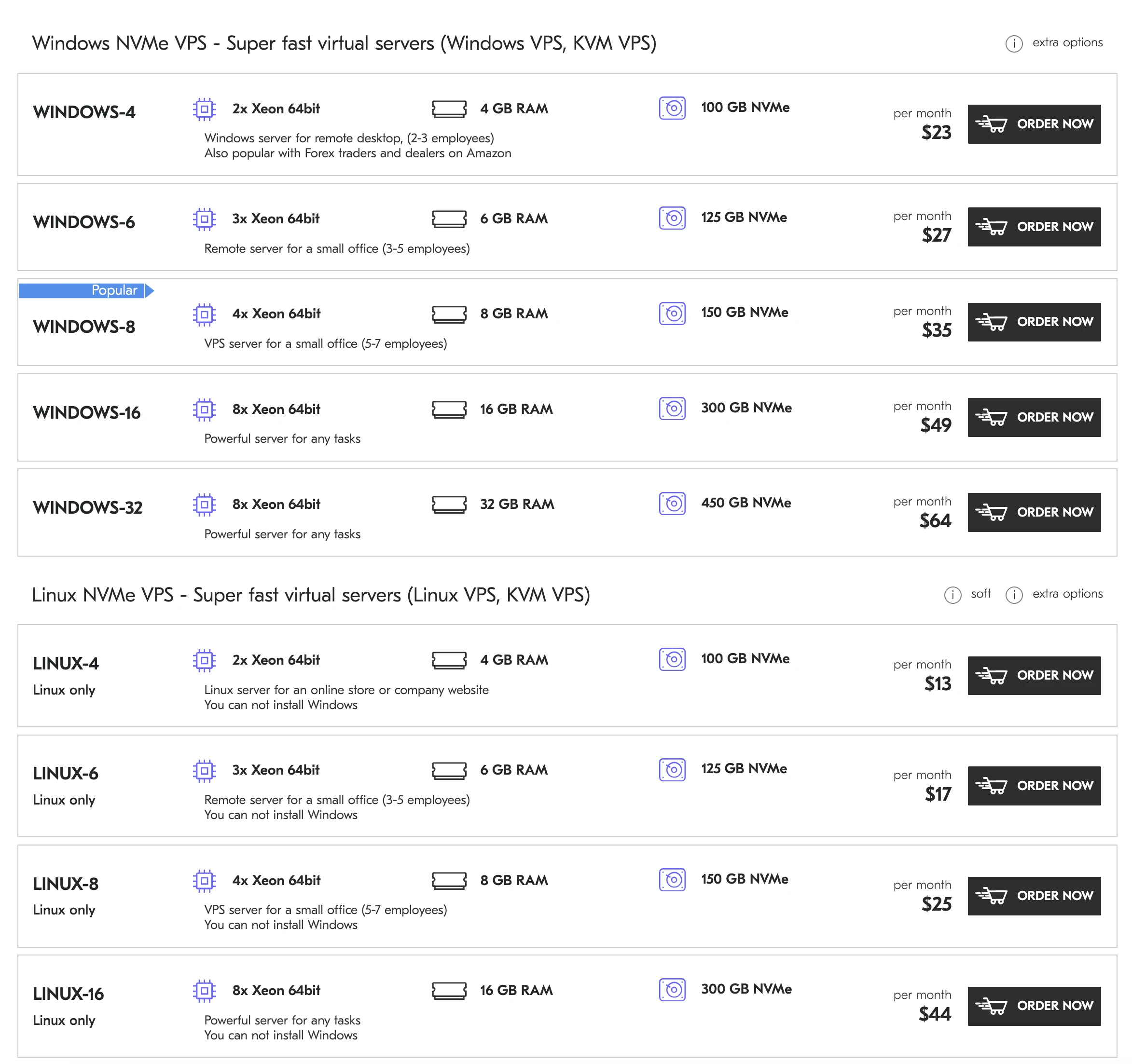
DeltaHost — One of the Leading VDS Hosting Providers
Among Ukrainian companies, DeltaHost stands out. For years, DeltaHost has been considered a reliable provider of VDS hosting, dedicated servers, and virtual environments. Their servers often come with modern NVMe storage, high-frequency CPUs, and flexible upgrade options. What makes DeltaHost different compared to competitors is its balance between pricing, technical support, and transparent configuration choices.
To explore their VDS services naturally, many users visit
👉 https:deltahost.comvps.html — not because of advertising, but simply because it offers clear technical specs and honest pricing.
Compared to many hosting companies, DeltaHost provides faster response times and infrastructure optimized for Ukrainian businesses.
And you, if you value reliability, will appreciate such an approach.
Choosing the Right VDS Hosting Plan
Let’s imagine that you’re launching a startup. Do you need a powerful server immediately? Not necessarily — begin with a basic plan and scale. **For example**, you need to host a blog or a corporate website. A 2-core VDS with 2–4 GB RAM and SSD storage will be enough. However, for e-commerce platforms or SaaS applications, choose 4–8 cores and NVMe SSD.
Compared to a dedicated server, VDS allows you to scale smoothly. Compared to shared hosting, it keeps your project stable. Compared to cloud hosting, it gives predictable monthly costs.
If you are evaluating options, focus on scalability, uptime, and transparency of resource allocation.
Conclusion: Why VDS Hosting Remains Relevant Today
So, VDS hosting is not just a technical solution — it is a tool that helps businesses grow, adapt, and stay secure. When projects become larger and more demanding, let’s consider the situation: shared hosting is no longer enough, and a dedicated server is too expensive. VDS becomes the perfect middle choice.
Whether you are running an online store, CRM, SaaS, a corporate website, or a media project, VDS ensures performance, flexibility, and stability. And Ukrainian providers — especially DeltaHost — make this option even more affordable while maintaining top-tier quality.
I wish you confidence in choosing the right VDS hosting plan and building a stable, long-lasting project on reliable servers.

Moh. Shobirin, S.Kom adalah founder Jawaracloud.net sekaligus SEO Expert dan penulis teknologi. Dengan gelar Sarjana Komputer dan latar belakang elektronika, ia memiliki keahlian lintas bidang—mulai dari perbaikan hardware (komputer/printer) hingga strategi optimasi mesin pencari. Selain berkarya, ia juga aktif sebagai Trainer di bidang IT.